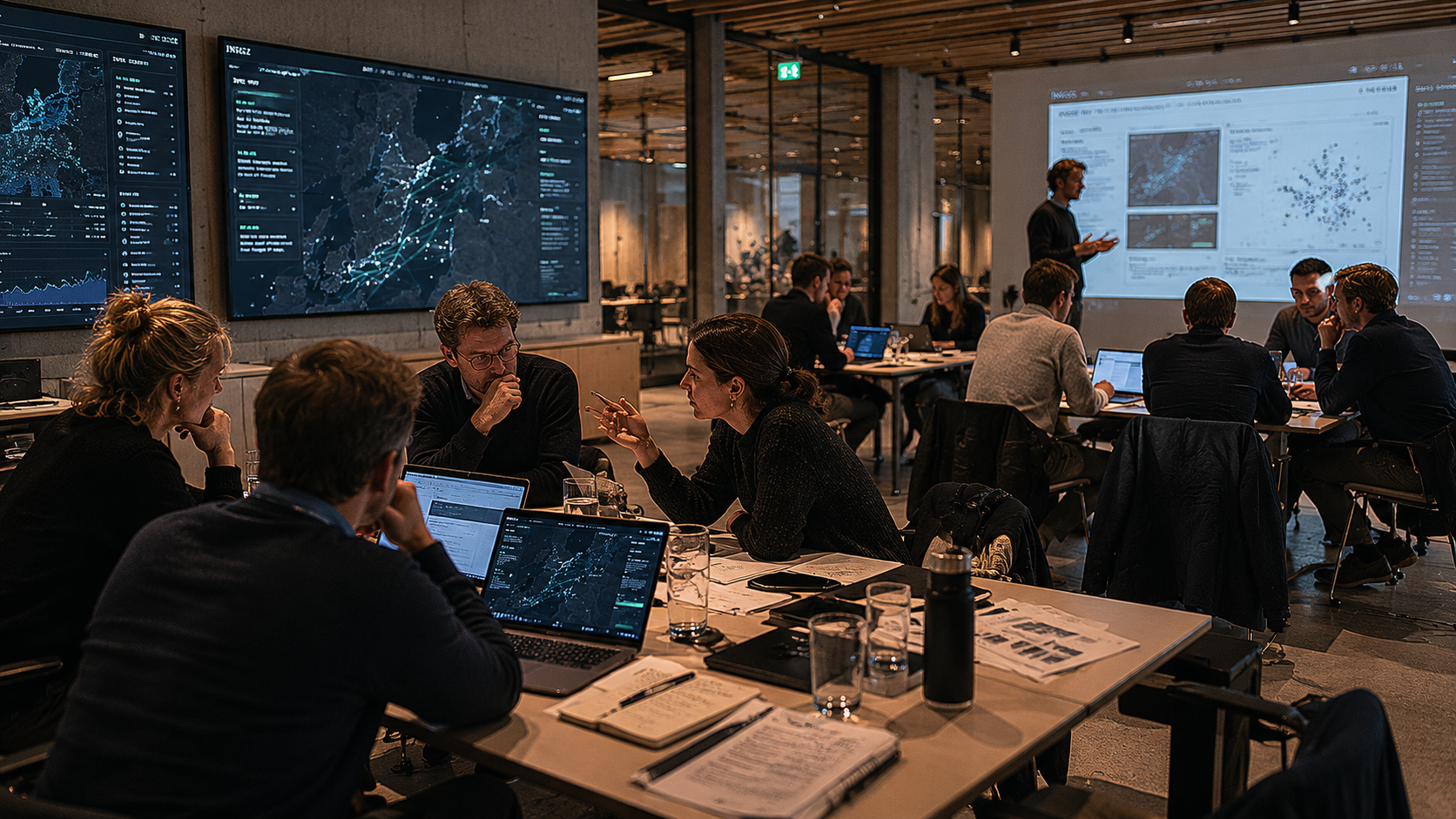
Decisions about the physical world are still made from PDFs, screenshots, and stale slides. insigz is the layer between live infrastructure and the people who have to act on it — a single canonical model where every observation, every entity, every event can be queried, traced, and reasoned about.
We don't name our customers. They're mid-to-large private and listed companies — and a few public institutions.
The organizations that get the most out of insigz work in domains where being named on a vendor's website is a liability, not a logo win. So we keep the client list private by default — and treat that discretion as part of the product, not a gap in our marketing. Under NDA, we're happy to share relevant references directly.
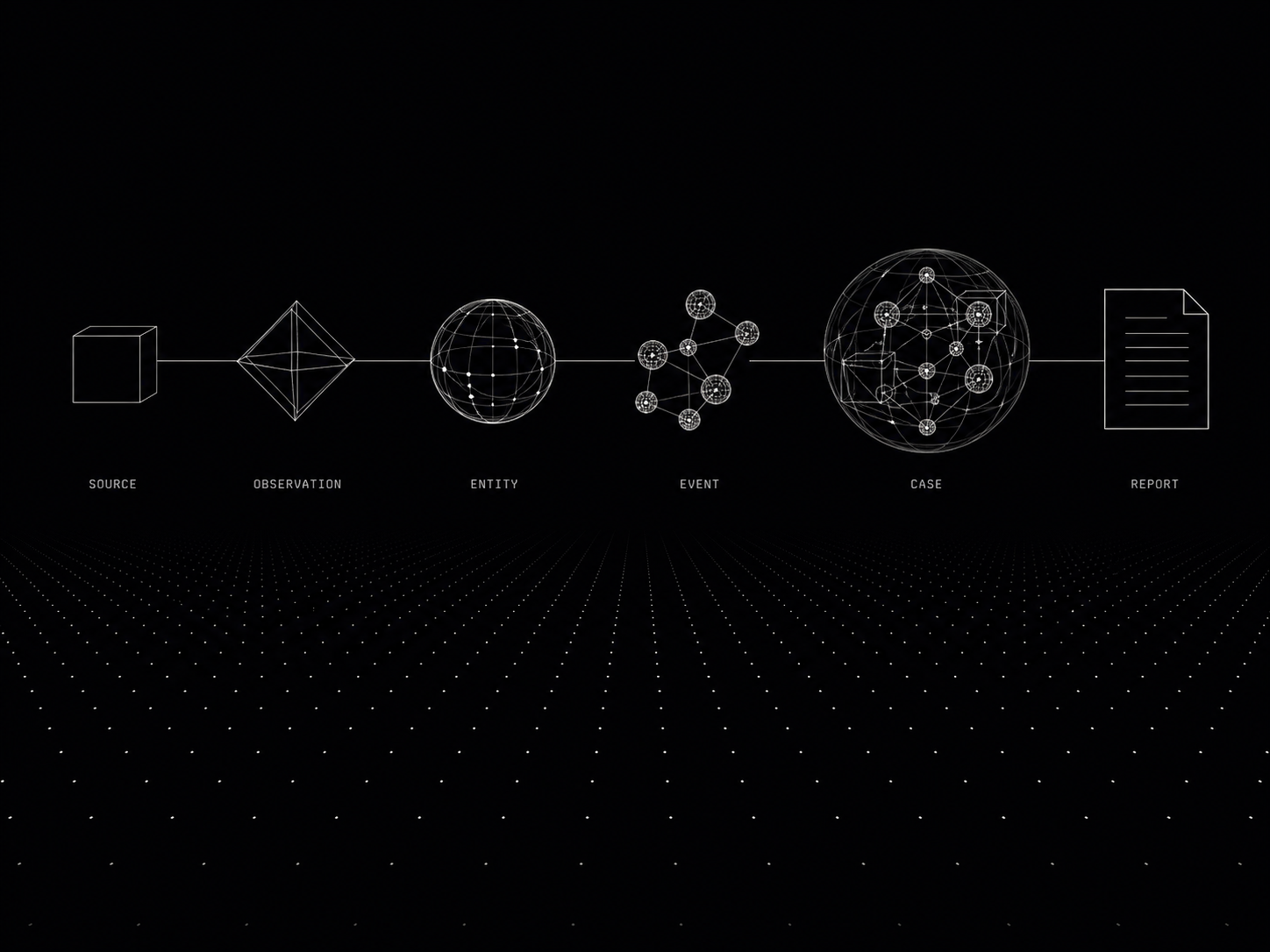
WHY WE STAY QUIET →Every piece of intelligence in insigz traces back along the same six-step chain. No bespoke pipelines, no silo'd buckets — sources flow into observations, observations bind to entities, entities accumulate events, events resolve into cases, cases publish as reports.

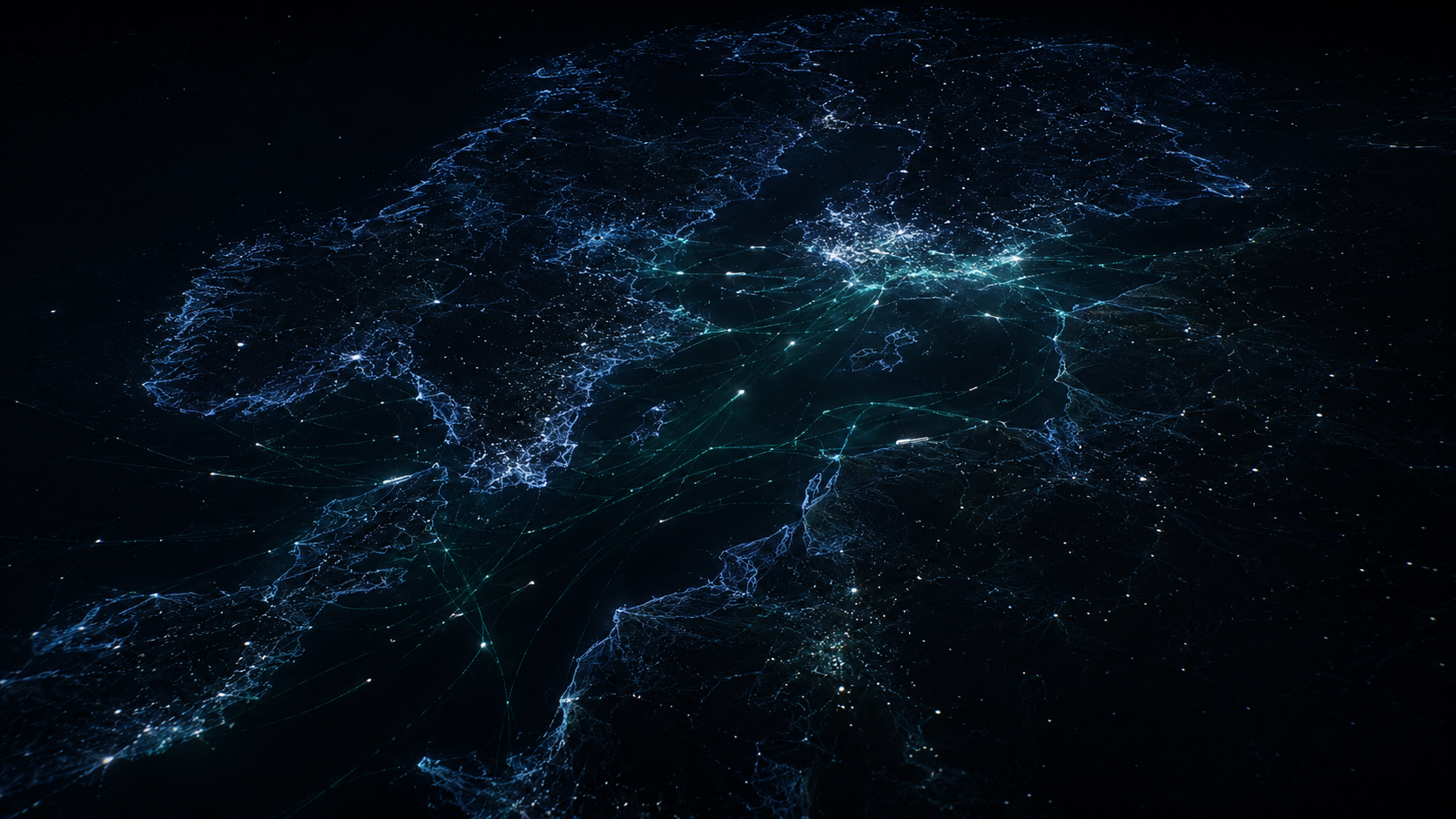
Electrical grid corridors, vessel positions, port states, market signals, sanctions designations, open-source news — all live, all geolocated, all queryable through the same model.
The seed for any session, scenario, or report is a single frozen moment of this world.
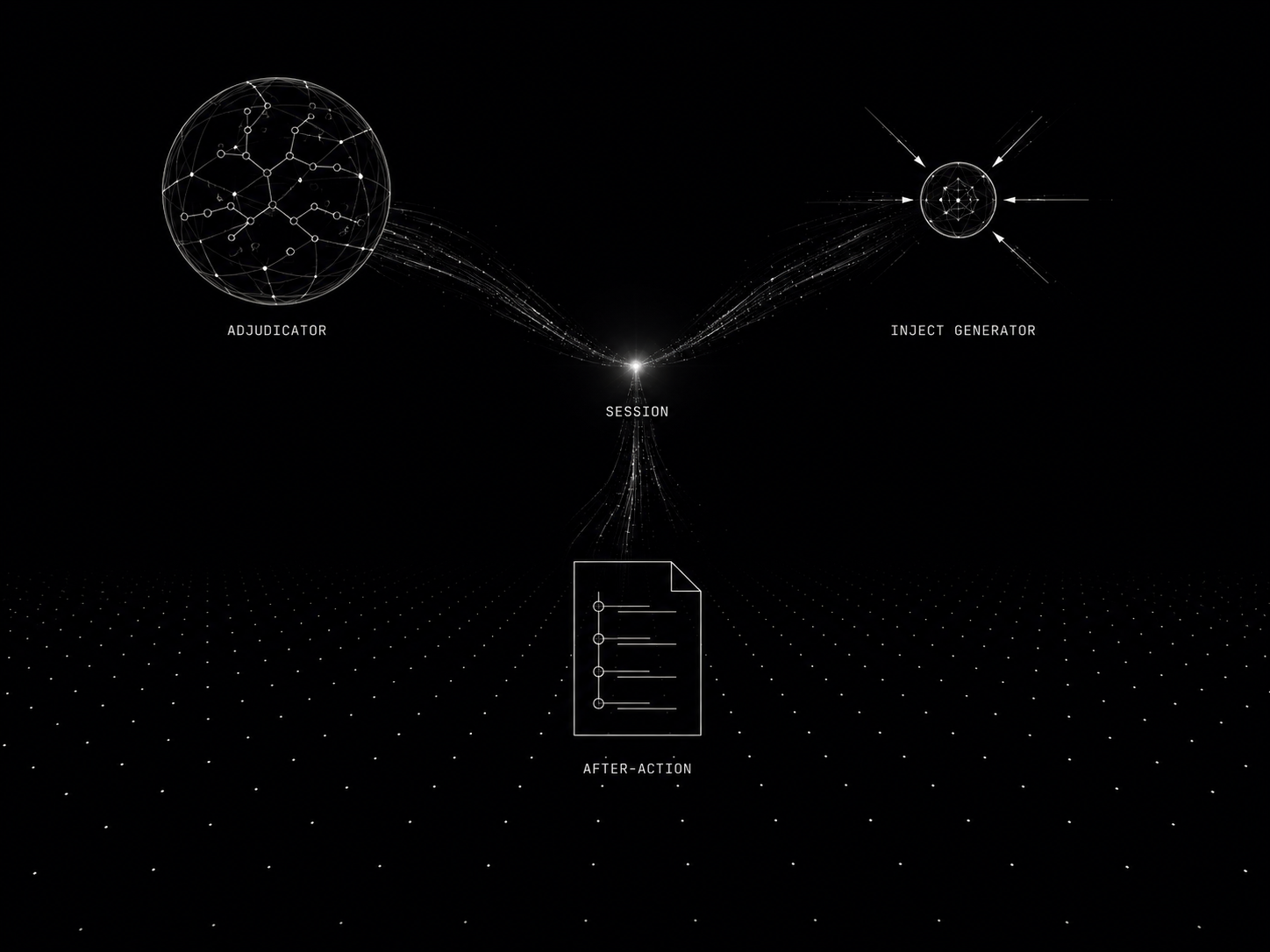
insigz's intelligence layer is built around three specialised agents — none of which publish autonomously. Every suggestion shows its reasoning, cites its source observations, and waits for a human in the loop. AI assists, never decides.

Given a proposed action and the relevant slice of world state, the Adjudicator produces 2–3 plausible consequence variants — each anchored in historical analogs, each with a confidence range, each with full reasoning visible.
The analyst chat runs Claude over the canonical model with tool access — it queries observations, entities, events and the document corpus to answer in plain language. Every claim cites the source observation it rests on.
At case close, the After-Action analyst drafts the full report: timeline, key decision points, base-rate benchmarks, discussion prompts. Every claim carries a citation back to a source observation.
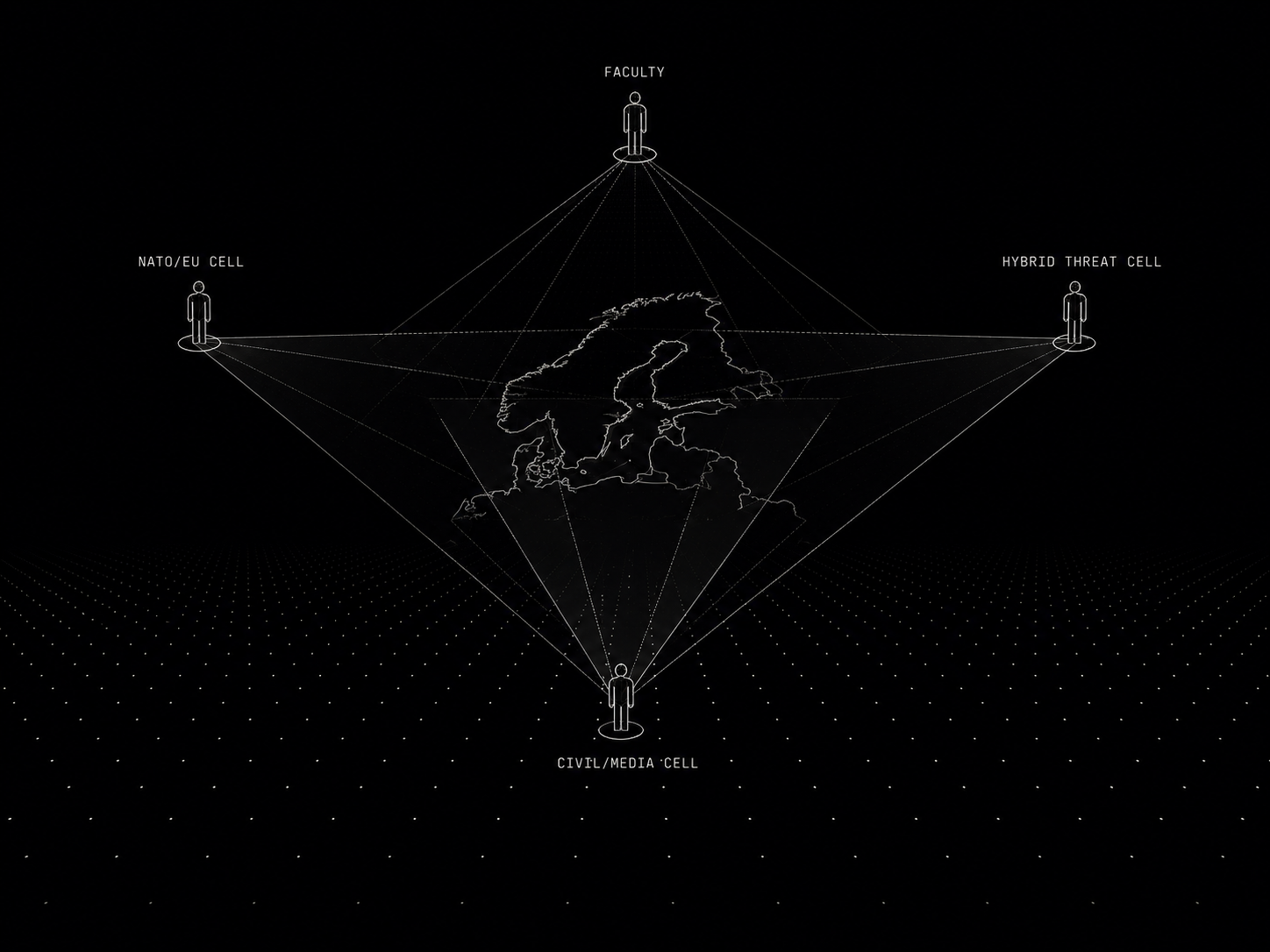
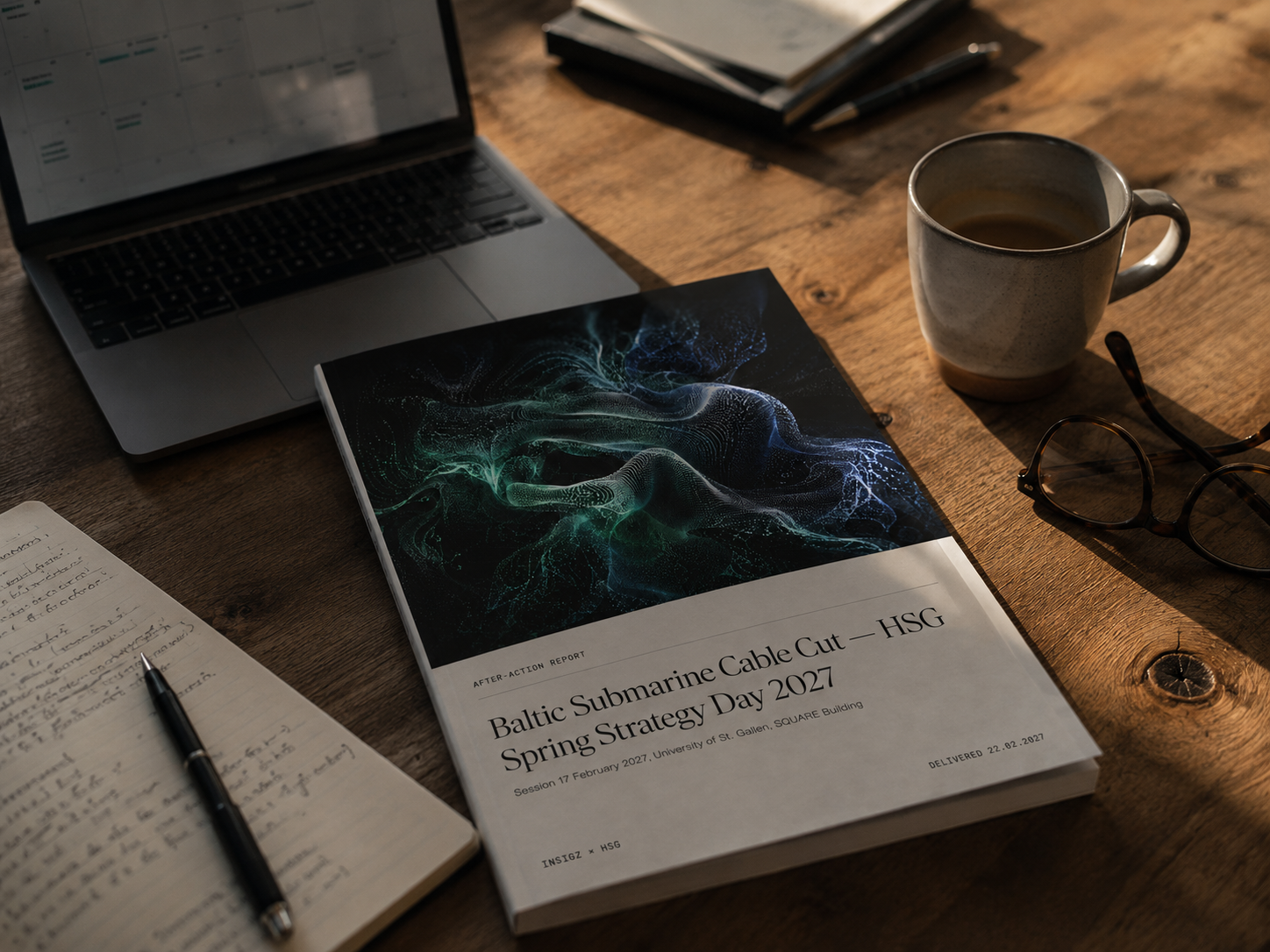
Sessions are an extension on top of the core platform — used by universities, defense academies, corporate scenario teams, and policy institutes for structured tabletop exercises. Each cell sees a different slice of the same world; information asymmetry is enforced by the data model, not by trust. The canonical example is the Baltic cable-cut Strategy Day, documented in depth here →.

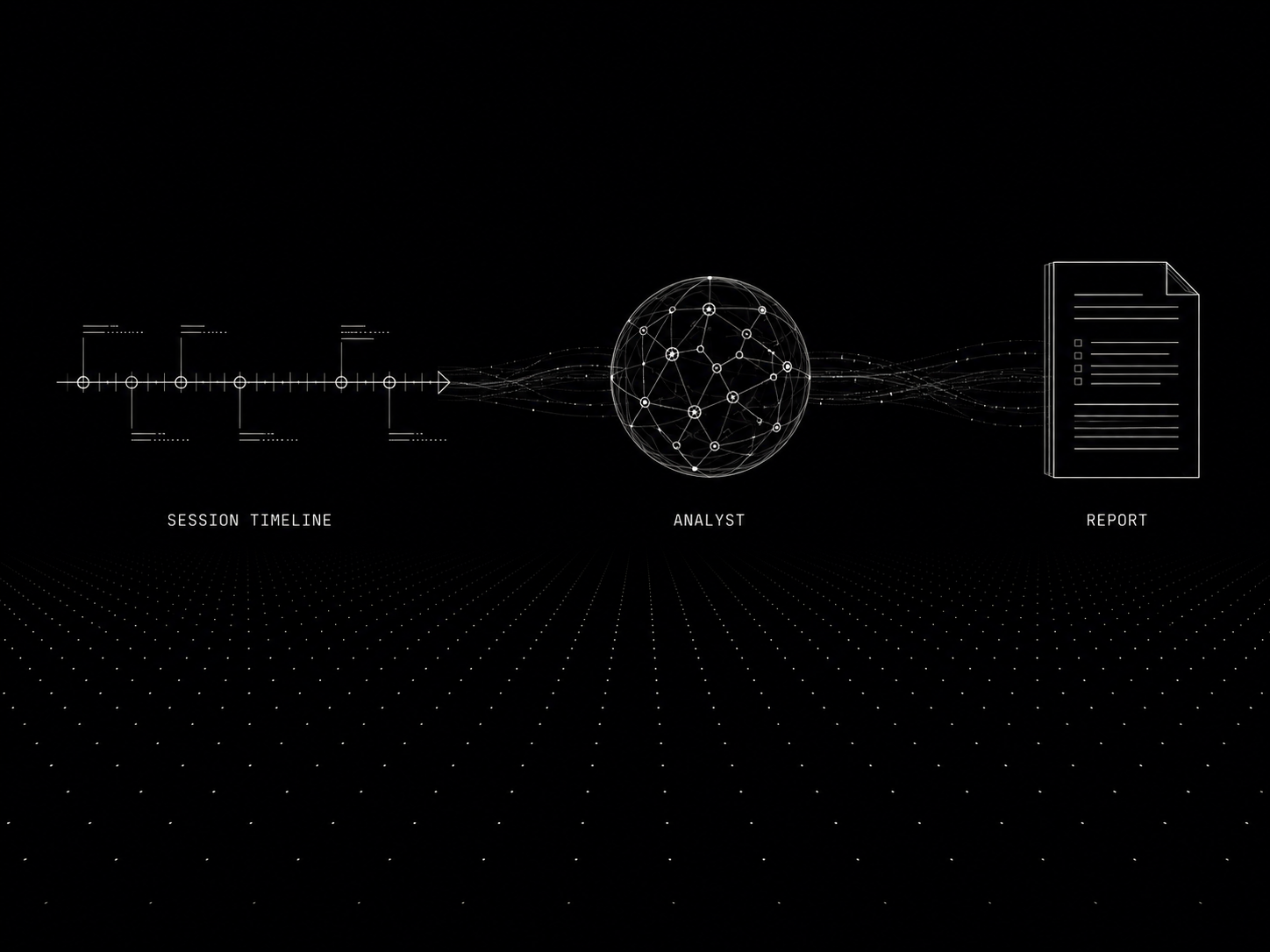
The After-Action analyst replays the full timeline, identifies key decision points, benchmarks against historical base rates, and ships a printed report — the artifact that leaves the room.

Every action, every consequence, every inject, every approval — recorded with timestamps and reasoning chains. The basis of the audit.
The agent identifies the 5–8 most consequential decisions, generates a base-rate benchmark for each, and drafts discussion prompts for the next session.
A printed report — generative cover, editorial inside — delivered as a signed PDF. Faculty edits; faculty signs; faculty owns.
Every report's cover is a generative data sculpture seeded from the session's UUID — visually unique, anchored to the case it documents. Inside: dense editorial typography, base-rate citations, full reasoning logs in the appendix for motivated readers.
Faculty and analysts cite it. Students keep it. Procurement files it.
Four layers, in series. Live data fuses upward into a canonical model; the agent triad reasons over it; sessions and reports leave the platform as signed artifacts. No proprietary data formats, no black-box pipelines.
The stack is opinionated and unfashionable on purpose. Every piece earns its place by being the simplest thing that holds up under audit and at scale. No frameworks adopted because of GitHub stars.
insigz is used by people under time pressure with consequence. The room is concentrated, calm, expert — not theatrical. The interface respects the operator's attention; the tooling earns trust by being precise.


Said up front, so the next conversation starts at the right altitude. None of these are insults to anyone building in the adjacent spaces; they are simply not what insigz is.
No classified data. No SCIFs. No sovereign sales. Built for commercial, journalistic, academic, and policy customers. That's a deliberate line, not a limit we'll quietly cross later.
No self-serve signup. No per-seat pricing. No shared multi-tenant pool. Each customer's deploy is single-tenant from day one — their own Cloud Run service, their own Postgres, their own Claude budget.
Every Claude response is grounded in retrieved observations via tool use. Citations are clickable. Wrong answers are traceable. The LLM never hallucinates a fact past the model.
Bespoke installations, intelligence-as-a-service, and structured session deliveries. No SaaS, no procurement marathons, no learn-our-platform tax. We deliver a working capability against a fixed scope.
A scoped deployment of insigz for a single team, region, or use case. We bring the data fusion, the agents, the model. Hosted by us or by you.
Recurring intelligence deliverables — sanctions enforcement briefs, shadow-fleet trackers, infrastructure risk monitors — drafted by the agents, signed by a named analyst on our side.
A turnkey multiplayer session for an academy, an executive team, a policy workshop. Canonical scenarios available; bespoke scenarios on request.